Cooperative by Design: Why Mesh Networks and Community Telcos Are Built for Each Other
A commercial telco and a mesh network are not different ways of solving the same problem. They are built on opposite assumptions about how infrastructure works. Understanding why that matters is the key to understanding why regional Australia keeps getting left behind, and what to do about it.

The Economics of Absence
In regional and rural areas, the connectivity gap is not a failure of effort or ambition. It is the predictable output of a particular economic model.
A commercial telco operates on supply-push logic: invest capital in infrastructure, then sell access to enough subscribers to recoup that investment and return a profit. Every tower, every fibre run, every piece of backhaul is a line on a balance sheet that has to eventually earn its keep. Dense urban areas are straightforward, with many subscribers per dollar of infrastructure. Sparse regional areas are not. The number of farms in the Flinders Ranges that a tower has to serve, divided into the cost of building and maintaining it, rarely produces an acceptable return. So the tower doesn’t get built, or it gets built to minimum spec and maintained by exception.
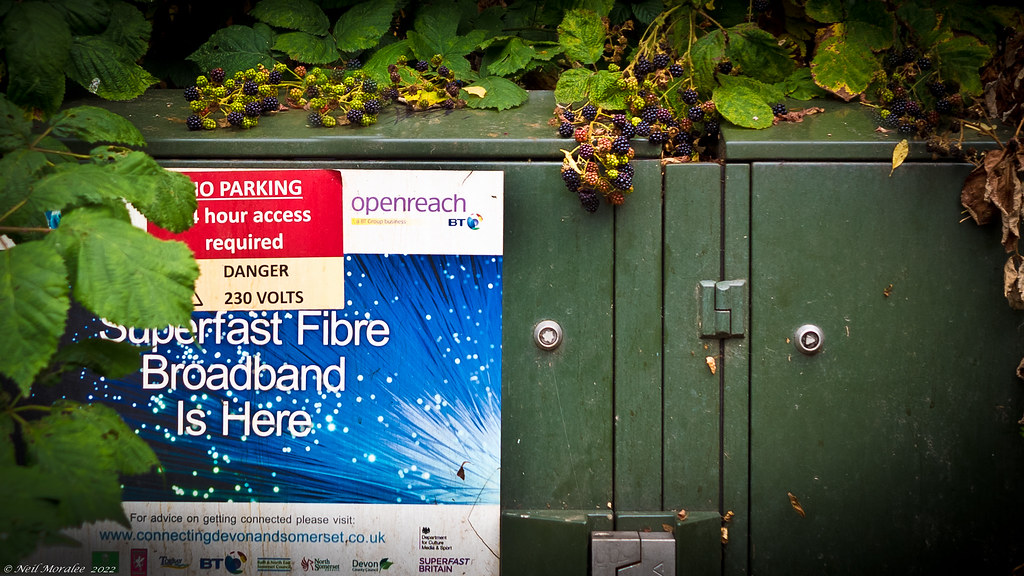
This is not malice. It is arithmetic. The commercial model is doing exactly what it was designed to do: serve markets that can generate profit. Regional Australia is structurally last in that queue, not because of corporate negligence but because of corporate logic. The NBN was supposed to fix this with public capital, but largely reproduced the same pricing logic in government clothing, infrastructure funded collectively but access priced commercially. That was not the original brief. The NBN was built to end exactly this kind of waste: Telstra and Optus had already spent the 1990s laying competing cable down the same profitable metropolitan streets while regional Australia got nothing, and the fix was one wholesale, publicly-owned fibre network that cross-subsidised the bush from the city as a matter of design. Successive federal governments then hollowed that brief out, choosing short-term budget savings over the nation-building purpose it was given and reusing ageing copper and pay-TV cable instead of finishing the fibre rollout. That choice belongs to the governments that made it, not to the people, many of them in regional and rural roles themselves, who have spent years building and maintaining the network they were handed.
The ACCC has raised concerns about Telstra’s dominance in regional mobile markets through successive inquiries. Each round of reviews documents the same structural pattern: where commercial competition is absent, quality is lower and prices are higher. The inquiry that would address this structural problem has not yet been held, because it would require admitting that the market is not working and cannot be made to work by adding more competition.
The Node That Changes Everything
Mesh networks are built on a fundamentally different assumption, and that assumption is cooperative by nature.
In a standard telco model, the subscriber and the infrastructure are separate categories. You pay for access; someone else owns the towers. Your monthly bill funds their capital recovery. Your participation in the network is purely passive.
In a mesh network, that separation collapses. Every node (every device running MeshCore or Reticulum over LoRa radio) is simultaneously a subscriber, a relay, and a piece of infrastructure. When you install a node on your water tank or your shed roof, you are not just connecting yourself. You are extending the network to your neighbours. They gain coverage from your node that would otherwise be unavailable, while the coverage you receive from theirs completes the mutual arrangement.
This is not a design choice that was bolted on for community-building reasons. It is how mesh routing physically works. Each node only needs to know its immediate peers. It has no map of the whole network, no connection to a central server, no authorisation hierarchy. When a path is blocked, the network finds another. When a node fails, the mesh routes around it. There is no centre to fail because there was never supposed to be one.
The architecture is cooperative because the physics require it.
Understanding this changes the question you are asking. You are no longer asking “how do we get a telco to serve sparse areas that aren’t profitable?” You are asking “how do we build a governance model that matches what the technology already is?”
Why Extractive Models Break What They Touch
If the cooperative architecture is already embedded in mesh networking, why not just let commercial operators run mesh networks? What breaks?
The first generation of so-called decentralised physical infrastructure networks answered this question clearly and expensively. One prominent example attracted hundreds of thousands of node operators worldwide with the promise of shared network ownership and reward for contributing coverage. What they built was a network in the technical sense (packets moved), but a corporation in every sense that mattered. Key decisions were made by a founding company. Token allocations enriched insiders. Governance structures existed on paper while effective control remained concentrated. The people who bore the hardware costs and maintenance burden were not the people shaping the network’s direction.
The node operators had taken on all the risk of a cooperative member while receiving the treatment of a customer. The cooperative trust that makes people willingly relay each other’s traffic, the trust that is the actual operational substrate of a mesh, eroded when it became clear that the value being created was flowing upward rather than circulating.
This is the critical point: an extractive layer doesn’t just take a cut. It breaks the incentive alignment that makes the mesh function in the first place. You cannot insert a profit-extraction mechanism into an architecture designed for mutual relay without destroying the mutualism that makes it worth building.
The technology was not the problem. The governance and economic model were the problem. The same distributed infrastructure that powered a failing extractive scheme can power a genuinely cooperative one. The tool doesn’t determine the politics: who owns the network and where the value flows does.
What Working Alternatives Look Like
Grassroots, cooperative, and community-led digital infrastructure is not a hypothetical model. Both in Australia and globally, working alternatives demonstrate how connectivity can be managed as a shared resource.
In remote parts of the Top End, such as Kalumburu in the Kimberley and Maningrida in Arnhem Land, the limitations of commercial satellite small-cells have led to the deployment of government-supported community networks. Historically funded under regional programs and now transitioning under the federal First Nations Community Wi-Fi Program, these initiatives provide free public Wi-Fi and VoIP telephone services. What began as government-funded infrastructure is increasingly co-designed and managed by local community members, ensuring the capability and digital literacy stay local rather than being extracted.
In South Australia, Air-Stream Wireless represents one of the world’s longest-running grassroots examples. Operating since 2001 as a member-supported, non-profit incorporated association, its members collaborate to build and maintain a resilient, independent wireless network. Over more than two decades, Air-Stream has demonstrated how a volunteer-run community network can sustain local infrastructure and foster digital skills without corporate backing.
In north-east Victoria and the Goulburn Valley, Community Business Connect operates as a social enterprise combining connectivity with digital literacy and small business support. Structured so that a minimum of 50% of profits are reinvested back into the community, it operates as a business whose purpose is to build local capacity rather than extract shareholder returns.
Globally, Catalonia’s guifi.net provides the ultimate benchmark for scaling this model. Operating as a “wireless commons” with over 35,000 active nodes, guifi.net uses a democratic charter, the Wireless Commons License, that allows individuals, local businesses, and municipalities to pool infrastructure. Local internet service providers can sell services over the network, but they must cooperate and contribute to infrastructure maintenance, showing how a commons-based model can scale to cover whole regions.
Across rural Victoria and New South Wales, member-owned fixed wireless co-operatives are covering properties that commercial operators walked away from. Members pool resources to deploy their own towers. The people paying for the service are the people governing it. When a member in a difficult valley is underserved, the people making decisions about tower placement are their neighbours, not executives in a capital city weighing market returns.
The common thread is not technology. These communities are using standard fixed wireless, commodity Wi-Fi hardware, and simple LoRa gateways. The common thread is ownership: local, accountable, and structurally incapable of extracting value from the community it was built to serve.
The Platform Cooperative as the Next Step
The existing models (altruistic community networks, government-seeded initiatives, member co-ops) have proven the principle. They have also revealed a ceiling.
Purely altruistic models are fragile. When key volunteers burn out or move on, the network degrades. Government-seeded networks depend on continued government interest. Member co-ops work well at the scale of a fixed-wireless tower serving a valley, but scaling governance across a larger, multi-technology network requires more structure than a well-meaning committee can provide.
The platform cooperative model addresses these limits directly. It is not a new idea (worker and user-owned digital platforms now operate across more than 60 countries, from ride-sharing to freelance services to food distribution), but it has not yet been applied systematically to community wireless infrastructure in Australia.
The structural elements are clear enough.
Demand before infrastructure. Rather than deploying coverage and hoping subscribers follow, a community co-operative validates demand before committing capital. This involves securing anchor commitments from local councils, farm co-operatives, or water authorities, generating pre-sales from households, or running a grant-funded pilot with measurable outcomes. This discipline is the direct antidote to the failure mode that produced hundreds of thousands of orphaned nodes serving almost no real traffic. It also inverts the commercial logic: instead of a corporation deciding where coverage is worth building, the community decides what problems it needs solved.
Utility-backed economics, not speculation. A cooperative telco’s financial model rests on the revenue real services generate: sensor data subscriptions from catchment managers and farmers, broadband access fees, edge computing for local agriculture. Any token or credit system that circulates value within the network should be backed by that real activity, not speculative asset appreciation. Demurrage (credits that expire if not circulated) prevents the hoarding dynamic that converts community infrastructure into a financial instrument.
Governance weighted by contribution, not capital. One member, one vote is the floor. More sophisticated models weight governance influence by active contribution to the network (uptime, data quality, participation in decision-making), with influence decaying if a member becomes inactive. This prevents the plutocratic capture that haunts simpler voting models, where whoever accumulates the most tokens gets the most say. It also creates a direct connection between doing the work and shaping the network’s direction.
Revenue that stays where it was earned. In a cooperative structured around real services, the revenue split is a governance decision, not a corporate one. The people generating the value (farmers hosting sensors, households subscribing to broadband, gateway operators maintaining the infrastructure) control how it is distributed. The commons treasury that funds public-good monitoring and network expansion is funded by the community’s own surplus, not extracted from it.
Why Co-ops Serve the Hard Country
There is a structural reason cooperative governance produces better regional coverage than commercial governance, and it is worth stating plainly.
Commercial operators price by population density. Sparse markets are uneconomic. The coverage edge retreats to where the arithmetic works.
Cooperative members govern by membership. The isolated property an hour from town has the same vote as the household in the main street. When a meeting decides whether to extend coverage to a difficult ridgeline, the people who would benefit from that decision are in the room making it. The governance incentive points toward the edges rather than away from them.
This is not idealism. It is the structural difference between a governance model that serves members and one that serves shareholders. Shareholders are not in the room. Members are.
The resilience argument reinforces this. When bushfire or flood takes out commercial infrastructure (towers losing power, fibre cuts, backhaul failures), communities that have built their own mesh networks keep communicating. Reticulum over LoRa running on battery-backed nodes at homesteads and rural fire brigade sheds does not depend on a data centre in Sydney. It depends on the nodes, which are already distributed across the landscape. Community ownership means those nodes exist because communities chose to maintain them, not because a maintenance contract was renewed.
The Satellite Question
Starlink deserves a direct answer. It has brought genuine connectivity to remote areas that would otherwise have none, and that matters. It is also between $75 and $150 per month for residential plans in Australia (and up to $210 for Roam Unlimited), all for a service controlled by a US corporation, subject to US law, routed through US-owned infrastructure, and dependent on continued launch schedules and pricing decisions made by a single private entity in another country.
Community-owned HaLow broadband (the 802.11ah Wi-Fi standard operating in the same sub-GHz spectrum as LoRaWAN) can be modelled at $30 to $60 per month per household at small deployment scale, with the cost improving as more households join. It runs on hardware sourceable from multiple suppliers, software that is open-source and auditable, and infrastructure owned by the community operating it.
Starlink serves isolated individuals. Community telcos serve communities. The difference is not just the price.
Building It
None of this requires starting from scratch. The building blocks are already here.
The open-source LoRaWAN server stack (ChirpStack, MIT-licensed) runs on a Raspberry Pi or a modest VPS. Reticulum handles multi-bearer encrypted mesh networking across LoRa, Wi-Fi, and anything else that moves bits. HaLow access points are now available at consumer price points. Platform cooperative legal structures exist in multiple Australian jurisdictions. Geospatial coverage verification tools are open-source and proven in the field.
What is missing is not technology. It is the local organising effort to run a demand assessment before deployment, the governance design work to structure a co-op that serves members rather than founders, and the patient capital (grants, member contributions, mission-aligned finance) that funds the first 20 gateways in a region without demanding a return that requires extracting value from the people you are supposed to be serving.
There is also a bigger piece of backbone already half-built: the NBN’s wholesale fibre network reaches deep into regional Australia, and a January 2025 federal funding commitment to finally finish replacing ageing copper with fibre shows the asset and the political will to complete it both still exist. New Zealand, whose smaller and denser geography made the job easier but who nonetheless stayed the course on full fibre rather than hedging with copper reuse, finished its equivalent rollout on schedule and now runs materially faster, more reliable, and more evenly provisioned broadband than Australia’s. The case here is not to replace community-owned networks with the NBN, but to fund and direct it as the sovereign trunk infrastructure it was meant to be, so that gateways in places like the Flinders Ranges or the Kimberley have genuine fibre backhaul to plug into rather than only a retail satellite bill.
Australian communities wanting to explore this have starting points: Community Business Connect as a working hybrid model; the Platform Cooperativism Consortium for governance frameworks; state and federal regional connectivity grants as potential seed funding. The ACCC’s ongoing regional telecommunications inquiries create political moments to make the case for cooperative models as a structural fix rather than a supplement to commercial provision.
The technology already knows what it wants to be. A mesh network wants to be a cooperative. The question is whether the humans building it will follow where the architecture points.
Related reading: Beyond the Big Telcos: Reclaiming Our Digital Lifelines on the first wave of community network alternatives. Unicorns Build Monocultures on why venture-backed models produce extraction, not resilience. The LPWAN Meshes series for the technical grounding. The Billion Dollar Brick on the pattern of dependency dressed as sovereignty.
Sources
Regional connectivity gap
- ACCC, Regional Mobile Infrastructure Inquiry: structural gaps in regional mobile competition
- ACCC, Telecommunications Monitoring: pricing and quality data in regional markets
- Department of Infrastructure, Transport, Regional Development, Communications and the Arts, Regional Connectivity Program
NBN and public broadband policy
- The Conversation, The NBN: how a national infrastructure dream fell short: original design intent and the multi-technology-mix downgrade
- ACS Information Age, Govt pledges $3b to “finish” NBN with more fibre: the January 2025 fibre-completion funding commitment
- ACS Information Age, NZ’s fibre broadband is faster than Australia’s NBN: comparative outcomes of New Zealand’s completed UFB rollout
Working Australian and global community network models
- Community Business Connect: NE Victoria and Goulburn Valley social enterprise combining connectivity with community capacity-building
- BIRRR (Better Internet for Rural, Regional and Remote Australia), Advocacy and connectivity resources: documented examples of member-owned fixed wireless networks
- Department of Infrastructure, Transport, Regional Development, Communications and the Arts, First Nations Digital Inclusion: remote community connectivity documentation
- Air-Stream Wireless: South Australian member-supported, non-profit community wireless network since 2001
- guifi.net: Catalan open, neutral, and community-owned “wireless commons” network and foundation
Platform cooperative models
- Platform Cooperativism Consortium: Trebor Scholz, The New School; governance frameworks and international examples
- Schneider, N.: Exit to Community framework; legal and financial pathways to cooperative ownership structures
Open-source network stack
- ChirpStack: MIT-licensed open-source LoRaWAN network server
- Reticulum Network Stack: transport-agnostic, encrypted mesh networking
- Uber H3, Hexagonal hierarchical geospatial indexing: Apache 2.0, used for verifiable coverage mapping
Wi-Fi HaLow
- Wi-Fi Alliance, Wi-Fi HaLow (802.11ah): technical overview of the sub-GHz standard
- Morse Micro, MM6108 product brief: current-generation HaLow silicon enabling consumer-accessible hardware
- Starlink, Australia service plans and Roam plans: current residential and roaming pricing
DePIN failure analysis
- Helium IOT network usage statistics, HeliumGeek Explorer: community-maintained explorer following decommissioning of explorer.helium.com
- ThingsIX, ThingsIX Foundation GitHub (2024): archived documentation and code repositories
- The Things Network, governance evolution, documented in TTI blog and community forum archives
Cooperative economics
- Platform Cooperativism Consortium: international cooperative digital platform examples
- Mondragon Corporation: 70-year cooperative track record across manufacturing, finance, and research
- ValueFlows, Economic vocabulary for distributed economic networks: open standard for tracking multi-dimensional value flows in cooperative networks
- Community Networks
- Cooperatives
- Mesh Networking
- Digital Sovereignty
- Rural Australia
- Telecoms
- Lorawan
- Commons
- Halow
- Reticulum
Webmentions
🔁 Reposted by 7 people



Want to comment? Reply to this post from your Mastodon/Fediverse account, or mention this post's URL in your reply. Your comment will appear here automatically!
Have your own blog? Send a webmention
to https://webmention.io/gaggl.com/webmention