Not a Single Local Drop: What Australia Could Borrow from the Italian Osteria
Part one ended in a Tuscan osteria where everything on the table came from the valley outside. This one starts in a pub in an Australian wine region, vines on every side, where I asked what local wines they had and got a blank look.
I’ve had that experience often enough that it no longer surprises me, but it still gets to me. It’s a small thing that says something large. In much of regional Italy, serving the neighbours’ wine is so obvious nobody would think to mention it. In much of regional Australia, it isn’t even on the list.
Italy’s regional food system rests on four things: shared processing infrastructure owned by small producers, legal protection for the names of places, public institutions that buy local, and pride. Australia is missing most of them. Some of that is structural and hard to change. Some of it is about to get easier than it has ever been.
A Food System Built to Leave
Start with where Australian food goes. According to ABARES, about 71% of Australia’s agricultural production is exported: 85% of canola, 82% of mutton and lamb, 77% of beef and veal, 75% of wheat. Australian agriculture was built as an export engine, and it’s very good at it. But a system built to ship bulk commodities to the other side of the world isn’t built to feed the town next to the paddock. The roads, the processing plants, the contracts and the farm sizes all point towards the port.
Then look at who sells what’s left. As I wrote in The Cooperatives of the Soil, Coles and Woolworths alone account for around 67% of Australian grocery volume. In Italy, it takes seven groups to reach 71%, and two of the three biggest are co-operatives.
Who Writes the Wine List
The pub wine list follows the same logic. Australia’s largest pub group, ALH, runs more than 350 licensed venues. It belongs to Endeavour Group, which also owns Dan Murphy’s and BWS. Endeavour’s own drinks business, Pinnacle Drinks, exists to supply its brands exclusively to those three channels.
Not every country pub belongs to a chain, and plenty of independent publicans do stock their neighbours. But the model explains a lot. When the wine list for hundreds of pubs is a procurement decision made in head office, it will be optimised for margin and supply contracts, not for the vineyard across the road. The local winemaker isn’t competing on quality. They’re competing against a business model they can’t enter.
The Co-ops We Lost
Australia had farmer co-operatives at real scale, and in dairy especially it let them go. Murray Goulburn was Australia’s largest dairy processor and a farmer co-operative, collecting around 3.4 billion litres of milk a year at its peak, more than a third of the national supply. In April 2016 it cut the price it paid farmers for milk retrospectively, suppliers left in droves, and in 2018 its assets were sold to the Canadian dairy giant Saputo for $1.31 billion. The co-operative was placed into liquidation in 2020.
The lesson I take from that isn’t that co-ops fail. It’s that co-ops which start behaving like corporations, chasing scale and listed-company capital, lose the thing that made them worth belonging to. Chasing scale is corporatising by another name, and it’s what undid Murray Goulburn and plenty of once-successful co-ops like it. A co-op will never be as efficient as a corporation at extraction, and it shouldn’t try to be. Its strength is the people in it, not a pathological need for growth. Italy’s small dairies and mills never tried to become national champions. They stayed at community scale, close to their members and the place, and when they needed reach they federated, as Melinda’s 16 co-ops did, rather than swallowing each other.
Who Our Representatives Listen To
None of this is an accident of geography. It’s a policy choice, and the people who profit from it pay to keep it that way.
Look at what happened to the one modest tool Australia did build. The Health Star Rating website went live in February 2014 and came down within hours, on the orders of the assistant health minister’s office. Her chief of staff had links to a lobbying firm whose clients included Cadbury, Kraft and the Australian Beverages Council. He resigned days later, and the minister denied any conflict of interest. The scheme survived as a voluntary one, with the food industry at the design table. Twelve years later it appears on 39% of the products it was meant to cover, and nutrition researchers at Deakin University found that 73% of the ultra-processed products carrying it scored 2.5 stars or more. Italy legislated what goes on a child’s plate. We let the people selling the food grade their own homework.
Sugar tells the same story. In 2016 the Grattan Institute proposed a tax on sugary drinks, and the Deputy Prime Minister called the idea “bonkers mad”. In 2018 both major parties rejected the AMA’s call for one. In 2024 the AMA and a coalition of health groups proposed a 20% levy on manufacturers, and a parliamentary inquiry into diabetes recommended a levy graduated by sugar content. The UK has had a sugary drinks levy since 2018. Australia still has none.
Follow the money and it isn’t hard to see why. A 2023 study of food industry donations in Queensland found the meat and sugar industries were the biggest donors, with 68% of the money going to one party, much of it just before elections. Federally, donations below a threshold that had climbed past $17,000 never had to be disclosed at all, so we only see part of the picture. Big Food and Big Ag don’t need to win every argument. They only need representatives who never quite get around to acting.
The rest of us pay the bill. Overweight and obesity are now the single largest contributor to Australia’s burden of disease, 8.3% in 2024, ahead of tobacco, and poor diet adds another 4.8%. The McKell Institute puts the cost of obesity at $39 billion a year in 2019, heading for $87.7 billion by 2032. That’s the real price of a food system run for exporters, supermarkets and manufacturers, and it’s charged to every taxpayer, every patient and every family who has watched someone they love get sick.
The Exceptions, and What They Have in Common
I went looking for Australian places that do this well, and the honest answer is: not many, and few of them the way Italy does. Several wine regions are getting there, but much of it is run by tourism associations: a branded trail, a festival weekend, a brochure. That’s marketing layered on top of a place. It isn’t lived by the average person at the corner pub, and it shows in the numbers. Industry figures from Australian Wine and the drinks analysts IWSR, reported in 2024, found that only about 12% of wine on Sydney restaurant lists comes from NSW, while imports take up nearly half. Melbourne lists manage about 30% Victorian wine.
There are real exceptions, though, and they’re instructive.
The Barossa. Adelaide is the national outlier: about 70% of wine on its lists comes from South Australia. The Barossa sits at the heart of that, and its food culture is lived rather than staged. German-speaking Lutheran settlers from Silesia, Brandenburg and Posen began arriving in the late 1830s, reached the valley in the early 1840s and kept coming through the 1850s, and their butchers, bakers and smokehouses never stopped. Mettwurst smoked over red gum, dill cucumbers and streuselkuchen have been handed down through generations, in a valley where some families are now on their seventh. The Barossa Farmers Market has run every Saturday since 2002. Wine writer Jeremy Oliver calls it “Australia’s only wine region with a genuine food culture of its own invention”. That’s a bold claim, but it’s the closest thing I know to an Australian osteria test that a region passes.
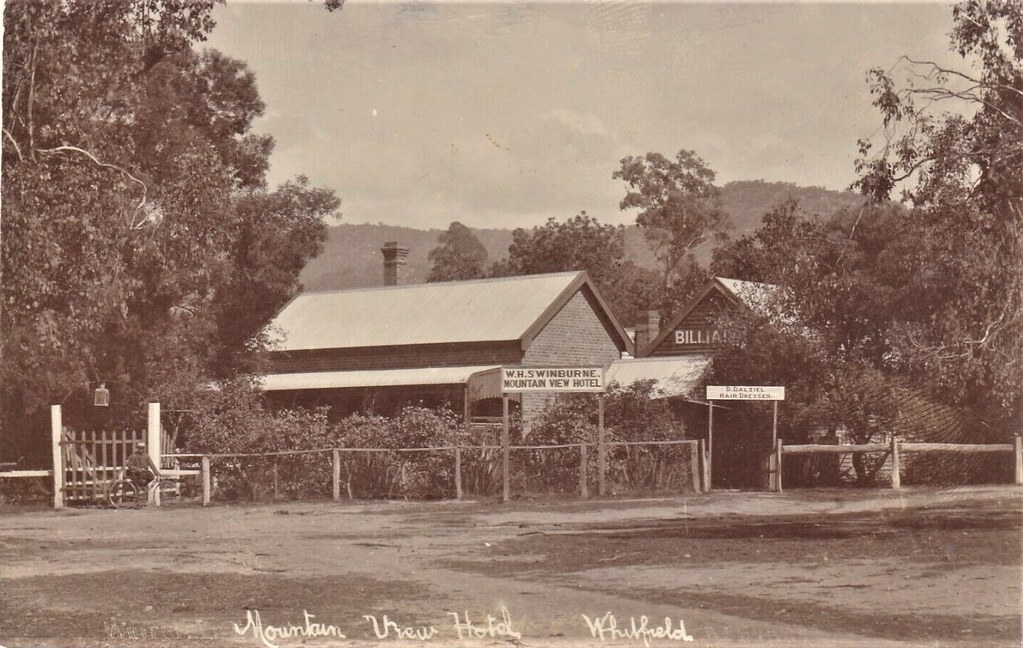
The King Valley. Italian families came to north-east Victoria to grow tobacco, and when tobacco faded in the 1970s and 1980s, many turned to wine. Otto Dal Zotto, who grew up in Valdobbiadene, the home of prosecco, planted Australia’s first prosecco vines on his former tobacco farm in 1999. The Pizzini family, related to the Dal Zottos, run the pub in Whitfield. The “Prosecco Road” is a tourism trail now, but it grew out of families, not a marketing plan. There’s an irony here: it’s the very word the EU spent almost eight years of trade negotiations fighting over.
Individual venues. The Overland Corner Hotel in South Australia’s Riverland, one of my regular stops, was built in 1859 and is the oldest building in the region. The National Trust has owned it since 1965, local families run it, and it pours the Riverland’s largest range of independent and local craft beer and wine, with local food to match. The Grain Store in Newcastle lists only Hunter Valley wine alongside independent beer. These exist because someone decided they should, not because the culture expects it.
Pubs the town owns. When the Royal Hotel in Grong Grong, in the Riverina, went up for sale in 2021 and found no buyer, locals offered stakes from $5,000 and raised more than $1 million from 169 shareholders to buy it that same year. Sea Lake in Victoria restored its condemned pub and runs it as a community co-op. In Nyabing, Western Australia, farmers share-farmed a crop for two seasons and used the proceeds to buy the town pub. These were rescues, not local-food campaigns. But a town that owns its pub also owns its wine list, and that’s a door Italy would recognise.
Co-ops that survived. Norco, founded in 1895 by 40 farmers meeting at Clunes in northern NSW, is still farmer-owned 130 years later, with 281 members on 188 dairy farms. It describes itself as Australia’s last operating dairy co-operative.
Public plates. Tasmania’s School Lunch Program now serves 21,500 free meals a week across 60 public schools. Fifteen Tasmanian growers supply it with apples, potatoes, flour and more. That’s the Italian canteen model, in miniature, in one state.
Open infrastructure. The Open Food Network, a not-for-profit founded in Australia in 2012, builds open source software that lets farmers, food hubs and markets sell directly, and has trialled shared logistics linking regional Victorian food hubs.
Look at what the strongest examples have in common. The two places where regional food pride is lived rather than marketed, the Barossa and the King Valley, are both places where migrants brought a European food culture with them and kept it going. Elsewhere, the exceptions come from individual owners, towns rescuing their own pubs, and a handful of co-ops and not-for-profits. None of it comes from the mainstream system. That tells me Australia doesn’t lack the capacity for this. It lacks the institutions that make it normal.
The Opening: Australia Is About to Get a Food GI System
Here’s the part that gives me genuine hope. Until now, Australia has had a geographical indication system for wine and nothing comparable for food. Producers who wanted to protect a regional food name had to use certification trade marks, a clumsier tool built for brands, not places.
That changes with the Australia–EU Free Trade Agreement, concluded on 24 March 2026 after almost eight years of negotiation. Most of the coverage focused on what Australia gave up: protection for 396 new European GIs (231 spirits and 165 food and agricultural products), plus new limits on names Australian producers already use, from feta to prosecco. Much less attention went to this line, as summarised by law firm Allens: “Australia will also implement its own domestic GI registration system, which will allow producers from Australia and other countries to register new GIs with effect in Australia.”
The treaty is expected to be signed in late 2026 or early 2027, and to come into force around late 2027. That gives Australian regions about a year to get ready. The design question that matters most is who writes the rules for each name. In Italy, a consortium of the producers themselves writes and polices them. If Australian GIs end up registered and controlled by the largest brand owners in each category, we’ll have imported the label without the substance.
What We Could Borrow
None of these needs Australia to become Italy. Each one is a piece of the Italian system that could work here.
1. Shared processing, owned by growers. The olive mill is the model. Australia has thousands of small olive groves, small dairies and small-scale livestock producers who can’t justify their own processing plant and are price-takers at someone else’s. Co-operatively owned mills, micro-dairies, small abattoirs and community winemaking facilities put the expensive part of the chain in the hands of the people who use it. It’s how a family with 1.6 hectares of apples in Trentino reaches European supermarkets on its own terms.
2. A GI system run by producers. Use the new register well. Regions should start organising now: which products, what rules, which producers, and a consortium structure that keeps control local and stops a single large player capturing the name.
3. Public plates that buy local. Italy’s school canteens are legally required to meet organic minimums, and their tenders reward caterers who buy locally. Australia has nothing like that. Most children eat out of lunchboxes, and hospitals and aged care mostly buy through national contracts. Public procurement that favours regional food would give small producers what they need most: a reliable buyer.
4. Space for farmers in public markets. Italy’s 2022 zero-kilometre law requires councils to reserve at least 30% of market space for farmers selling their own produce. Australian councils could do the same tomorrow, without waiting for federal legislation.
5. Make local the default in regional hospitality. Regional tourism bodies spend public money marketing wine regions. They could reasonably ask the venues they promote to put local producers on the list. And all of us can run the osteria test ourselves: ask at the bar what’s local, and keep asking.
6. Make provenance provable. Pride needs something to stand on. A regional name means little if nobody can check that the product came from where it says. Open traceability (the kind of shared, verifiable record we’re building into GrowGood with digital product passports) lets a small producer prove origin without paying a certification industry for the privilege.
Pride Can’t Be Legislated, but It Can Be Practised
Italy’s campanilismo, the stubborn loyalty to your own bell tower, took centuries to grow, and no law created it. Australia won’t import it by decree. But the raw material is already here. Migrants have kept bringing food knowledge far older than the colonial export economy: German butchers and bakers in the Barossa, Italian families in the King Valley, and later Vietnamese and Cambodian communities with food traditions every bit as rich and old. Each was frowned on or laughed at when it arrived, and each has made Australian food better. Treat that knowledge as the new approach it is, rather than a threat to bland colonial thinking, and the Barossa, the King Valley, Grong Grong and Tasmania’s school kitchens stop looking like exceptions. They deserve far more celebration than they get.
What a GI register, a co-op mill or a council market rule can do is make local pride pay. Italy’s lesson is that it takes both: people who care about their place and think as a community, and institutions that reward that caring, kept through decades of pressure to let them go. Australia’s capitalist monoculture, with its export commodities, two supermarkets and head-office wine lists, has had its run. We can see its effects: rural towns hollowed out, diets that draw more than 40% of their energy from ultra-processed food, and pubs in wine country that can’t pour a local glass.
The next time you’re in a wine region, ask the question at the bar. If the answer is a blank look, ask why.
Sources
- ABARES. Snapshot of Australian Agriculture. Export share of production.
- Endeavour Group. Our brands, and Mumbrella: Pinnacle Drinks. ALH Hotels, Dan Murphy’s, BWS and Pinnacle Drinks’ exclusive supply model.
- Pubtic and Commercial Real Estate. ALH venue numbers.
- Murray Goulburn Co-operative. Wikipedia. And Co-operative News: Murray Goulburn shareholders approve sale to Saputo.
- FoodNavigator (2014). Official’s lobbyist wife drawn into star rating web site ruckus. And Food Magazine, Health Star Rating website relaunched.
- Food Standards Australia New Zealand. Health Star Rating and Nutrition Information Panel review: Food Ministers’ Meeting outcomes. Uptake figures via Food & Drink Business.
- Dickie, S. et al. (2020). Evaluating Nutrient-Based Indices against Food- and Diet-Based Indices to Assess the Health Potential of Foods: How Does the Australian Health Star Rating System Perform after Five Years? Nutrients, 12(5), 1463.
- Food Magazine (2016). Sugar tax idea “bonkers mad”, says Joyce. On the Grattan Institute’s sugary drinks tax proposal. And MacroBusiness (2018), Coalition, Labor reject tax on sugary drinks.
- AMA (2024). Key health leaders launch Rethink Sugary Drink alliance. 20% health levy proposal.
- House of Representatives Standing Committee on Health, Aged Care and Sport (2024). The State of Diabetes Mellitus in Australia in 2024. And ABC News (2026), Sugar tax on drinks may improve oral health in Australia, study suggests.
- Who is donating to political parties in Queensland, Australia? An analysis of political donations from the food industry (2023). Public Health Nutrition. And Australian Electoral Commission, Disclosure overview.
- Australian Institute of Health and Welfare (2024). Australian Burden of Disease Study 2024. Via newsGP.
- McKell Institute and Menzies Research Centre (2026). A Preventable Crisis. Cost of obesity to the Australian economy.
- Cox, K. (2024). Why Aussie wines aren’t on local menus (and it’s worse in NSW). The Border Mail, 4 November 2024. Citing Australian Wine and IWSR data.
- South Australian Tourism Commission. Overland Corner Hotel. See also WeekendNotes: The Historic Overland Corner Hotel. And Caravan Correspondent: Overland Corner on the Murray River.
- Newcastle Herald: Restaurant review, The Grain Store.
- Barossa Grape & Wine Association. Barossa food story: social traditions and Barossa Farmers Market. See also SBS Food: Homegrown Barossa Valley. Jeremy Oliver, Barossa Slow, for the “genuine food culture” quote. And South Australian History Hub, Germans in South Australia.
- Visit Melbourne. Prosecco Road, and Traveller: King Valley guide.
- BCCM. Farming town grows community crop to buy local pub and Community co-op revitalises condemned pub. And Narrandera Argus: Massive community effort keeps pub alive.
- Norco. Norco celebrates its 130th birthday, Food Processing, 2025.
- Pulse Tasmania: School lunch program drives new demand for Tasmanian farmers, and Premier of Tasmania: Doubling the School Lunch Program.
- Sustainable Table. Open Food Network is empowering community food enterprises. And Dumbo Feather: The Open Food Network on its founding.
- Allens (2026). Feta, Ouzo, Glera: key changes under the Australia–EU trade agreements.
- New Zealand MFAT. Australia–European Union Free Trade Agreement: key outcomes from concluded negotiations.
- Mediobanca (2025). Italian large-scale retail report, via Startmag.
- WIPO. Melinda: The First Italian Designer Apple.
- Legge 17 maggio 2022, n. 61. Normattiva.
- DM 65/2020, minimum environmental criteria for school catering. Orizzonte Scuola summary.
- Regional Food Systems
- Geographical Indications
- Cooperatives
- Australian Agriculture
- Australia-EU FTA
- Local Wine
- Food Sovereignty
- Rural Australia
Comments
Be the first to comment! Reply to this post from your Mastodon/Fediverse or Bluesky account, or mention this post's URL in your reply. Your comment will appear here automatically via webmention.
Follow this blog on Mastodon at @gaggl.com@web.brid.gy or on Bluesky at @gaggl.com